
No products
Prices are tax included
-
-
-
-
Air Suspension
-
-
-
Air Management
-
-
-
Air Suspension
-
-
-
Air Suspension
-
-
-
Air Suspension
-
-
-
Air Suspension
-
-
-
-
Air Suspension
-
-
-
Air Suspension
-
-
-
Controller Mounts
-
-
-
-
-
-
Air Helper Spring Kits
-
-
-
Air Helper Spring Kits
-
-
-
Air Helper Spring Kits
-
-
-
Air Helper Spring Kits
-
-
-
Air Helper Spring Kits
-
-
-
-
-
Springs
-
-
-
Lowering Springs
-
Lifting Springs
-
-
-
Lowering Springs
-
-
-
Lowering Springs
-
-
-
-
-
-
-
-
-
-
-
Featured Accessories
-
-
-
-
-
-
-


Air Compressors and Tanks
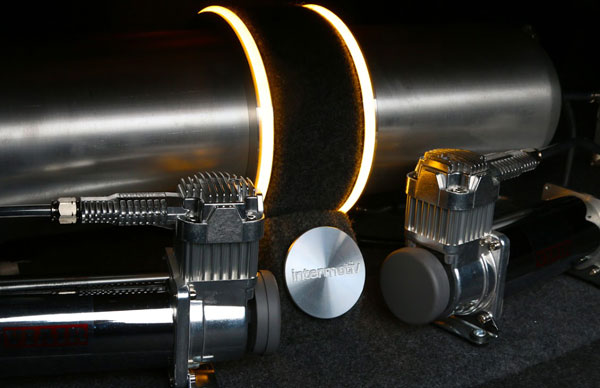
If you're running a full air suspension setup, you will need both a compressor and a tank. The setup works just like a normal workshop compressed air supply - the compressor draws in air from the atmosphere and fills the tank. The tank stores the compressed air so that it's ready to be deployed to the air springs at all times.
Air Tanks
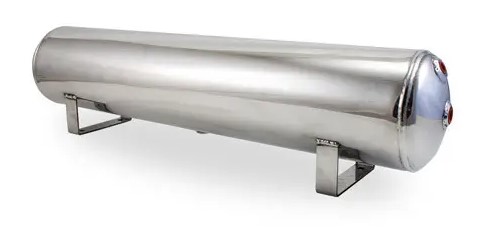
Tanks are available in many shapes and sizes. The larger the tank, the more air you have to play with. However, the larger the tank, the longer it will take the compressor to fill it.
In most cases, a tank size of around 4 gallons (15 litres) is a good compromise between air storage, refill time and ease of installation. This is small enough to fit in most boot spaces, but large enough to lift most vehicles from fully dropped to ride height and usually beyond, without having to wait for the compressor to refill.
It is possible to run a smaller tank if you're short on space, you just might find you have to wait for the compressor to catch up when raising the car. In some cases (dependent on pressure ratings of all the component parts), it's possible to run the tank pressure higher, which enables a small tank to give a little extra air storage.
For awkward spaces, it is also fine to run more than one tank. There are a lot of cars running two 2.5 gallon tanks for example.
Tanks are made from a variety of materials: steel tanks tend to be more industrial and best for harsher environments. Aluminium tanks are best for weight saving and show builds, and seamless aluminium tanks give a nice clean look. Carbon fibre tanks are generally aluminium tanks with a carbon skin. Actual carbon fibre tanks do exist, but they are incredibly costly and don't generally have the traditional carbon weave you'd expect.
Air Compressors
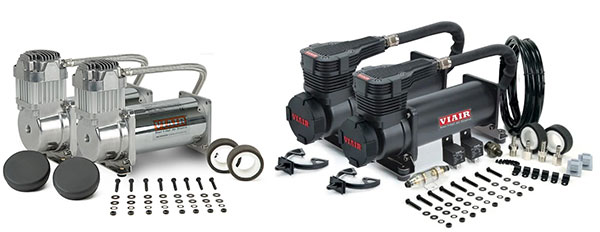
For the majority of setups, a single Viair 444C compressor offers a good balance of performance, reliability and cost. With compressors there is generally a trade off between cost, noise level and speed, as well as current draw and duty cycle. It is possible to upgrade the compressor to a faster, quieter model. It is also possible to upgrade to run two compressors, which is generally the best way to improve the setup.
Duty Cycle
Compressors get very hot. The duty cycle refers to how long the compressor can be run for a given time period, at a given pressure, at room temperature, before it needs to cool down. It's commonly expressed in a percentage:
Duty Cycle = Run Time ÷ (Run Time + Off Time)
For example in a 1 hour period with a 25% duty cycle: 15 minutes of run time must be followed by 45 minutes of rest time.
100% duty cycle means the compressor can run continuously and this is the case for the majority of compressors we offer. However, all compressors, regardless of rated duty cycle, require sufficient rest time in between cycles to cool down.
The following table shows the pressures and fill rates of some of the common Viair compressor models.
| Model | CFM | Max Pressure | Current | Duty Cycle | Max Tank Size |
Average Fill Rate |
| 380C | 1.58 | 200PSI | 23A | 100%@100PSI, 55%@200PSI | 5 gallon | 0-145PSI: 7:20 |
| 410SS | 1.73 | 200PSI | 25A | 100%@100PSI, 50%@200PSI | 5 gallon | 0-145PSI: 6:50 |
| 444C | 1.76 | 200PSI | 20A | 100%@100PSI, 50%@200PSI | 5 gallon | 0-145PSI: 6:50 |
| 480C | 1.86 | 200PSI | 23A | 100%@100PSI, 50%@200PSI | 5 gallon | 0-145PSI: 6:02 |
| 485C | 2.24 | 200PSI | 23A | 100% @ 200PSI | 5 gallon | 0-200PSI: 9:45 |
| Dual 410SS | 2.94 | 200PSI | 46A | 100%@100PSI, 50%@200PSI | 10 gallon | 0-200PSI: 5:30 |
| Dual 444C | 3.53 | 200PSI | 46A | 100%@100PSI, 50%@200PSI | 10 gallon | 0-200PSI: 5:30 |
| Dual 485C | 3.82 | 200PSI | 46A | 100% @ 200PSI | 10 gallon | 0-200PSI: 4:50 |
Compressor Noise
All compressors make a noise, but this stops once the tank has reached pressure. The smaller models like the 380C and 444C tend to give off more of a buzz, while the 480C is more of a low pitched drone. The next generation 485C is significantly quieter and less obtrusive, and the 410SS with its antivibration mounts is one of the quietest options.
It is often possible to quieten down the compressor with the use of anti vibration mountings, or simply sound deadening the panel it is mounted to. Air Lift make a very high end compressor isolator kit. Do not be tempted to box in the compressor too tightly, as they need plenty of air to prevent overheating.
Adding Another Compressor
In practice, most air suspension vehicles don't need two compressors, but a second compressor is a good investment if you have the space and budget for it. Not only does it fill the tank faster, it reduces the stress on a single compressor, as they run for less time. As an aside, it gives a bit of redundancy should one compressor malfunction for any reason. It can also be great for aesthetics in show builds.
To add a second compressor, it is important to account for the extra current. In most cases you should not run two compressors on the same wire from the battery, and it is advisable to run them on separate fuses and switching relays, rather than rely on one large fuse. It is possible to wire in the second compressor yourself, but the addition of a second compressor harness does make the job a lot simpler.
Our Recommendations
- Most cars: 4 gallon aluminium tank and a single Viair 444C
- Faster refill times and show builds: dual 444C compressors
- Premium setup: Dual 485C or 410SS compressors
- Limited space: 2.5 gallon tank